
 English

Systemic Dynamics
Systemic dynamics examine how the international system functions beyond event-level dynamics.
These contents do not focus on individual crises or theatres, but on the structural connections linking conflicts, economy, energy, capital, and the cognitive domain.
The objective is to identify how distributed pressures generate converging effects across the global system, reshaping its stability, resilience, and capacity to adapt.
-
From Chokepoint to Systemic Tension
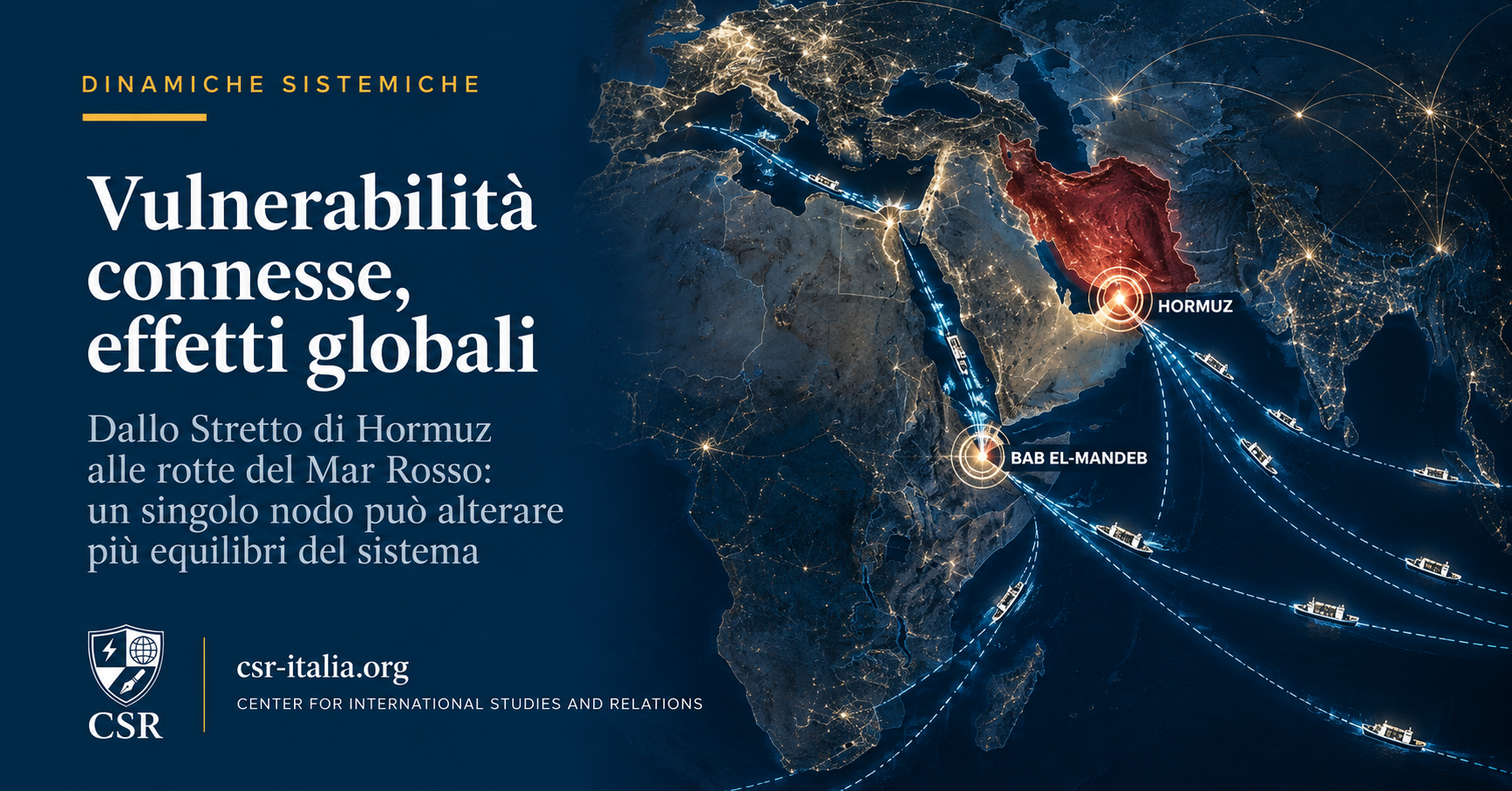
When a crisis erupts in a high-density strategic node, the most common mistake is to treat it as a local event. Analysis focuses on the initial theatre, the directly involved actors, and the most visible military sequence. But not all crises remain where they begin.
-
The First 120 Hours of a Global Systemic Crisis
Contemporary systemic crises often begin before open conflict. Cyber, energy, logistics, and information compress states’ decision-making time. Europe is vulnerable as an interdependent system, and Italy stands as a critical Mediterranean node. The strategic priority is to prevent partial shocks from escalating into systemic crises.
-
Hormuz Is Not Just a Strait
The 2026 Hormuz crisis demonstrates how vulnerable the global economy remains to a small number of strategic chokepoints.
When the Gulf's energy corridor is disrupted, the consequences extend far beyond oil and LNG, affecting logistics, insurance costs, inflation, and global supply chains.
For Europe and Italy, the stakes involve energy security, transport costs, and overall economic resilience. -
The Fragilities of Global Power Networks
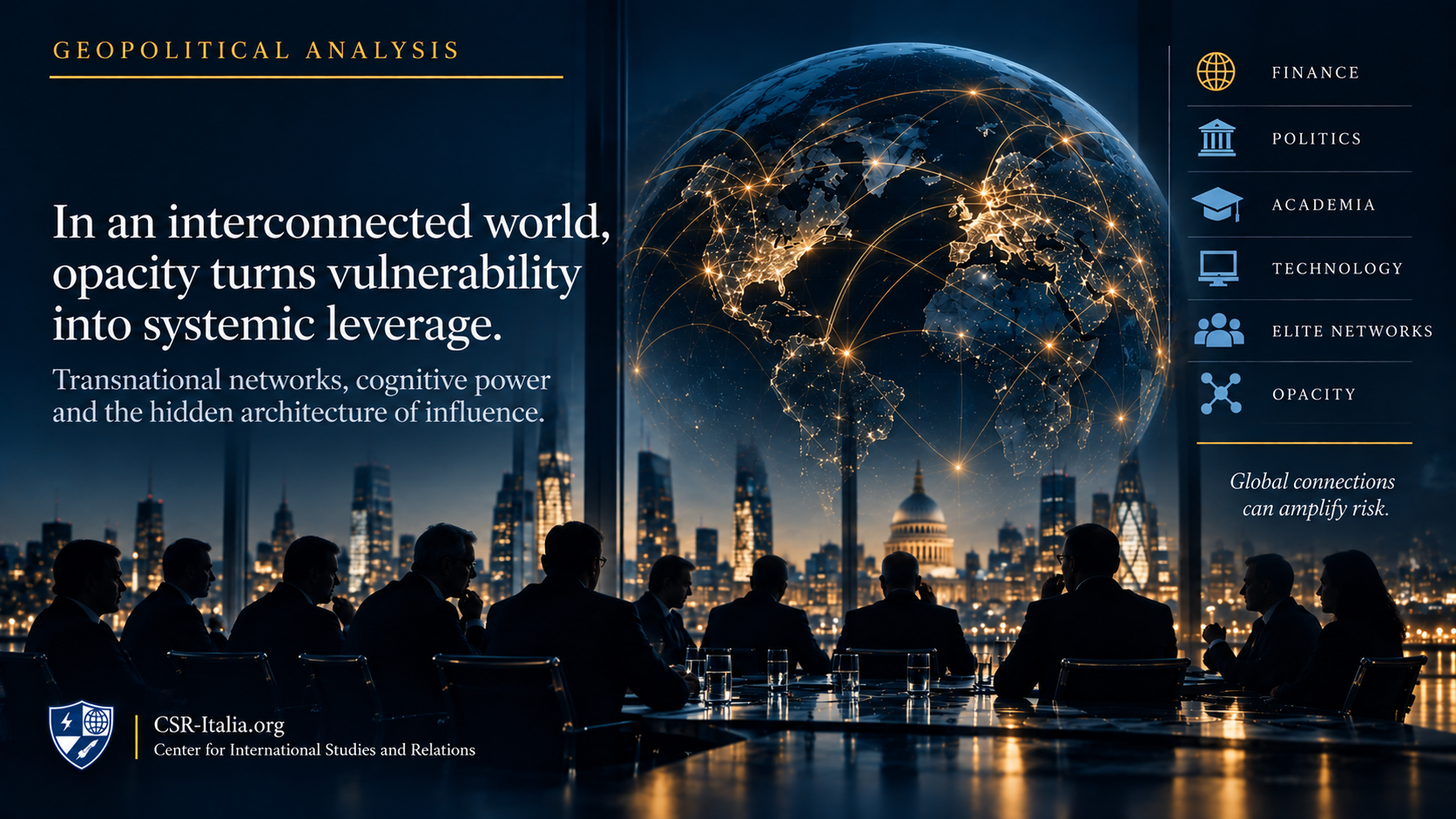
The fragmentation of global governance leaves elite networks structurally exposed. When a central node becomes vulnerable, the impact is not merely reputational: it can drive a cognitive restructuring of the entire system. This analysis applies the theory of cognitive power to this dynamic.
-
Sanctions as Systemic Coercion: Energy, Payments, and the Fragmentation of Global Governance
In the current geopolitical context, sanctions have moved beyond their role as temporary instruments of pressure. By 2026, they increasingly function as permanent regulatory architectures, producing political alignment through the systemic costs of divergence. Their primary impact is not immediate punishment, but the structural transformation of global economic governance.