
 English

Tag: Economic security
-
Come la concentrazione dei colli di bottiglia trasforma la dipendenza commerciale in vulnerabilità strategica: focus su Cina, Europa e Italia Nel dibattito pubblico sulle materie prime critiche prevale ancora una lettura riduttiva, centrata sulla scarsità delle risorse, sull’aumento della domanda e sulla necessità di diversificare gli approvvigionamenti. È una lettura parziale. Il problema reale non…
-
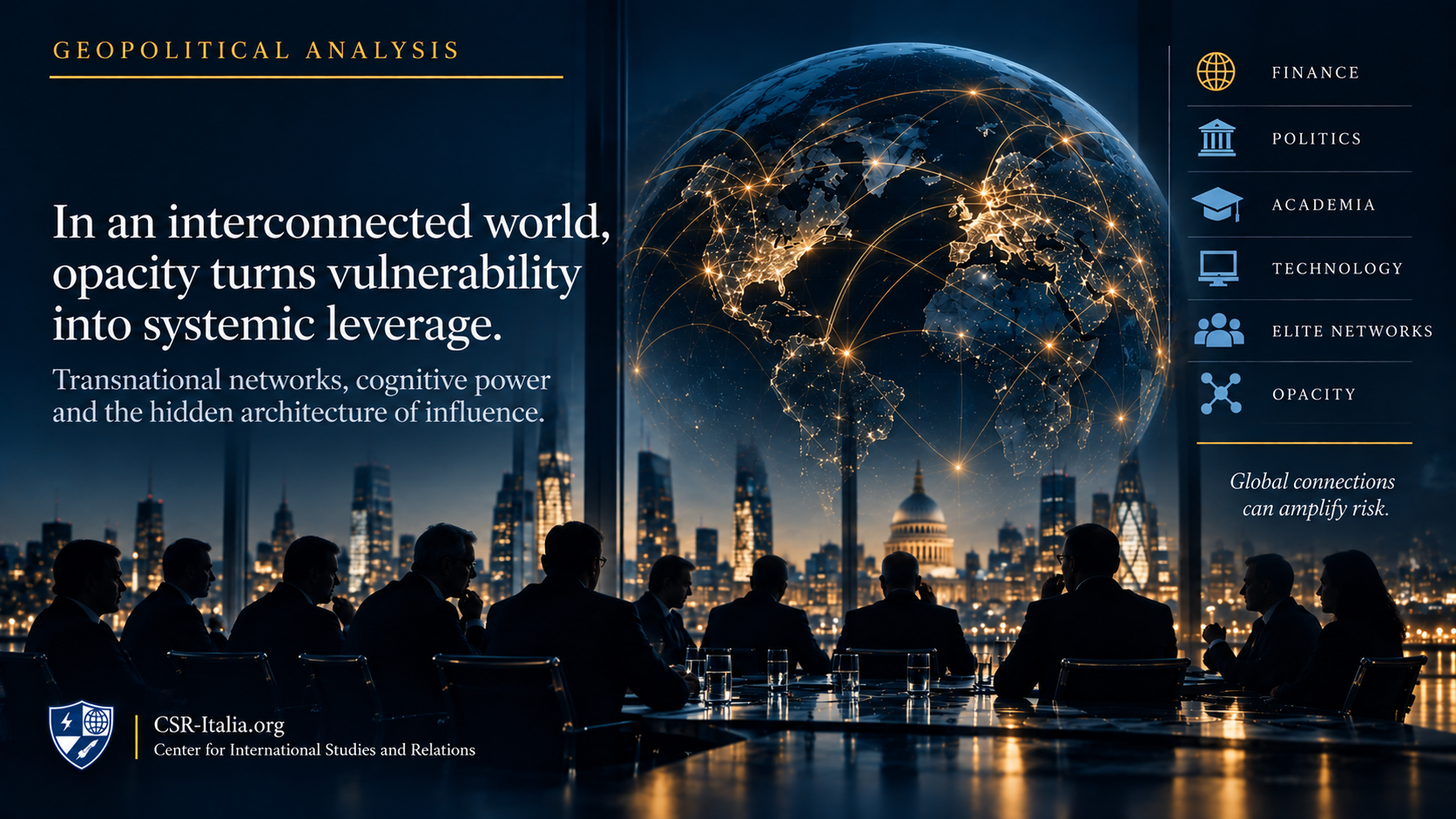
The fragmentation of global governance leaves elite networks structurally exposed. When a central node becomes vulnerable, the impact is not merely reputational: it can drive a cognitive restructuring of the entire system. This analysis applies the theory of cognitive power to this dynamic.
-
France, Lebanon, Syria, and Namibia are not separate dossiers, but expressions of a single European fragility. Europe invests, regulates, and participates, yet does not control the material and cognitive supply chains that shape real power. The result is a structurally weak presence: visible within complex systems, but marginal in their direction.
-
In the current geopolitical context, sanctions have moved beyond their role as temporary instruments of pressure. By 2026, they increasingly function as permanent regulatory architectures, producing political alignment through the systemic costs of divergence. Their primary impact is not immediate punishment, but the structural transformation of global economic governance.
-
In 2026, the global oil market does not appear diminished by sanctions, but structurally transformed. Coercive measures have accelerated the emergence of a bifurcated system, in which formal and parallel circuits coexist with distinct rules, pricing mechanisms, and infrastructures. Energy thus emerges as a strategic infrastructure of power, rather than a commodity governed primarily by price.