
 English

Tag: Critical infrastructure
-
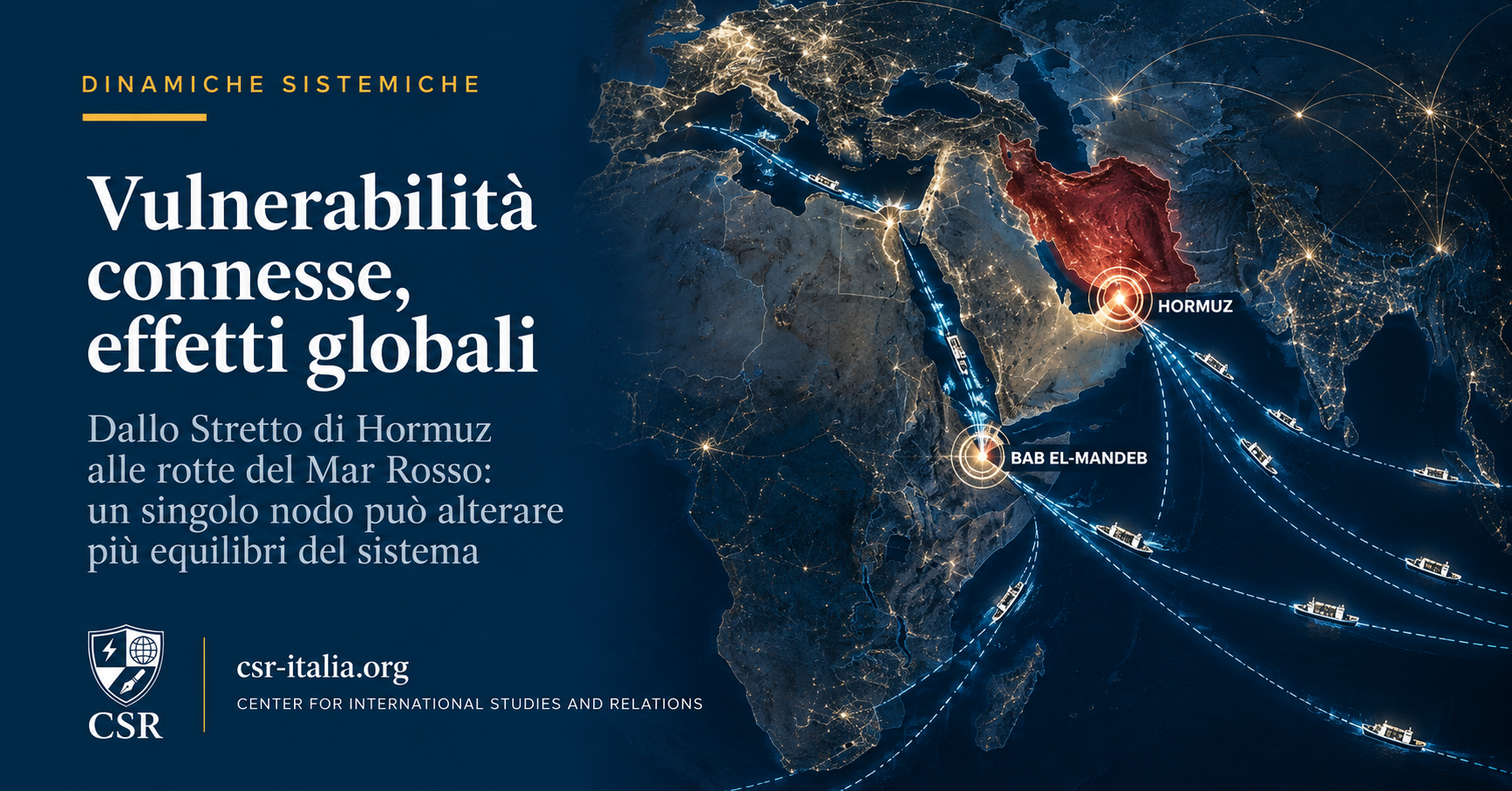
When a crisis erupts in a high-density strategic node, the most common mistake is to treat it as a local event. Analysis focuses on the initial theatre, the directly involved actors, and the most visible military sequence. But not all crises remain where they begin.
-
Contemporary systemic crises often begin before open conflict. Cyber, energy, logistics, and information compress states’ decision-making time. Europe is vulnerable as an interdependent system, and Italy stands as a critical Mediterranean node. The strategic priority is to prevent partial shocks from escalating into systemic crises.
-
La crisi di Hormuz del 2026 mostra quanto l’economia globale resti vulnerabile a pochi chokepoint strategici. Quando si blocca il corridoio energetico del Golfo, l’impatto non riguarda solo petrolio e GNL, ma anche logistica, assicurazioni, inflazione e supply chain. Per l’Europa e per l’Italia, la posta in gioco riguarda sicurezza energetica, costi di trasporto e…
-

The fragmentation of global governance leaves elite networks structurally exposed. When a central node becomes vulnerable, the impact is not merely reputational: it can drive a cognitive restructuring of the entire system. This analysis applies the theory of cognitive power to this dynamic.
-
When strategic competition is no longer about territories, but about systems. In the current geopolitical context, technology and energy no longer function as separate domains of economic or industrial policy. They have become core infrastructures of strategic power, through which dependencies are constructed, margins of sovereignty are constrained, and state decision-making is shaped.